Dream Bold: The Font That Makes Your Brand Impossible to Ignore
When you’re running a small business, every piece of communication matters. From your logo on the door to the label on your product, your font choice is a silent ambassador for your brand. It speaks before your customers even read the words. This is where Dream Bold comes into play. As a strong, eye-catching display font, its thick letters and modern style are designed to command attention and inject energy into your brand’s visual identity.
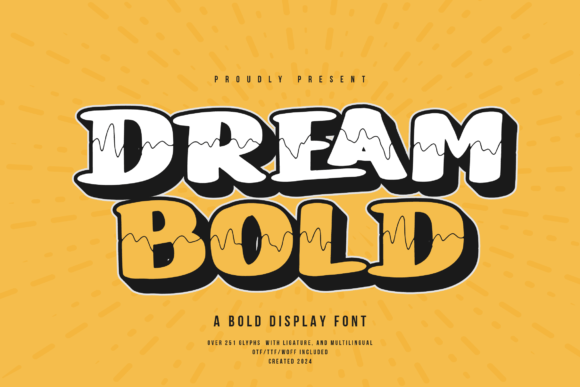
Let’s talk about what Dream Bold actually is. It’s a typeface with personality: confident, fun, and utterly modern. Its letters are substantial and clear, built to stand out on any surface. The overall mood is one of cheerful assertiveness—it’s not intimidating, but it’s certainly not shy. This makes it perfect for businesses that want to project professionalism without being stiff, and memorability without being gimmicky.
Using Dream Bold Across Your Real-World Business Materials
The true power of a premium font like Dream Bold isn’t just in looking good once; it’s in creating a consistent look everywhere your customer encounters you. Consistency builds trust and makes your brand instantly recognizable. Here’s how Dream Bold can elevate your everyday materials.
For your logo design, Dream Bold offers a fantastic foundation. Its thick strokes ensure your business name remains legible even when scaled down for a website footer or up for a storefront sign. A handmade candle brand, for instance, could use Dream Bold for its main logo, conveying both craft (through the handmade product) and modern confidence (through the font).
In packaging design and product labels, clarity is king. Dream Bold’s weight makes it excellent for the primary product name on a label. Imagine a small-batch skincare line: using Dream Bold for the product name on the bottle (“Nourishing Face Serum”) ensures it pops against clean packaging, while a simpler sans serif font handles the details. This combination looks professional and trustworthy.
Your customer-facing print materials are another area of impact. Business cards with your name in Dream Bold make a lasting first impression. Thank-you cards and stickers included with orders gain a distinctive, branded touch. For a café or boutique, a menu or flyer using Dream Bold for section headings (“Espresso Drinks,” “New Arrivals”) guides the customer’s eye with style and fun.
Dream Bold in Your Digital World
Digital presence is non-negotiable, and your fonts need to perform on screens just as they do on paper. Dream Bold excels here. For website visuals, use it in your main hero banner headlines to immediately state your value proposition. On social media content like Instagram posts and Pinterest graphics, Dream Bold creates thumbnails and quote graphics that stop the scroll. Its clarity ensures readability even on smaller mobile screens.
In digital ads, whether for Facebook or Google, the primary goal is to grab attention within seconds. A headline rendered in Dream Bold does that job effectively. For an online shop selling handmade goods, using this font for promotional graphics (“Summer Sale Live Now”) creates a cohesive look that ties back to the brand’s packaging and labels.
Making Practical Choices: When and How to Use Dream Bold
Dream Bold is classified as a display font. This is a key practical distinction. Display fonts are designed for short, impactful text—headlines, logos, titles, and accents. They are not typically designed for long paragraphs of body text. Here’s your practical guide.
Use Dream Bold as a headline font. This is its primary role. On your website, for your blog post titles, for key section headers on your menu or brochure.
Use Dream Bold for your logo. It can form the entire logo or be combined with a simple icon or graphic.
Use Dream Bold as an accent font. Use it sparingly to highlight a single, important word or phrase on a longer document.
Do not use Dream Bold as your main body text font. For readability in longer sections—like your website’s “About Us” page, product descriptions, or blog article paragraphs—you need a more neutral, easy-to-read serif font or sans serif font. This is where font pairing becomes essential.
Simple and Effective Font Pairing for Your Brand
Pairing an expressive typeface like Dream Bold with a readable supporting font creates balance and professionalism. The rule is simple: one personality font, one utility font.
A clean, modern sans serif font like Open Sans, Montserrat, or Lato is a perfect partner for Dream Bold. Use the sans serif for all your body text and smaller details. This pairing feels contemporary and clean, ideal for tech startups, coaching businesses, or modern product brands.
A classic serif font like Georgia or Merriweather can also work well, adding a touch of warmth and tradition. This combination might suit a bakery brand, a boutique with a vintage aesthetic, or a specialty food product, where the Dream Bold headline provides modern energy and the serif provides grounded readability.
Always test your pairings. Create a mock business card or a simple web banner with both fonts before committing. See how they feel together and ensure the hierarchy is clear—Dream Bold for emphasis, its partner for information.
Readability in Real Business Settings
A font must work in the real world. Dream Bold’s thick letterforms offer excellent readability at larger sizes, but there are considerations for very small applications.
On small product labels, like those for mini jars or tags, use Dream Bold only for the primary product name, and ensure the text is large enough to maintain the letterforms’ integrity. On printed packaging, where space is ample, it performs brilliantly.
On mobile screens and in social media thumbnails, its bold nature helps it stand out against busy backgrounds, but again, keep its use to headline-sized text. Avoid using it for tiny captions or fine print.
A Final, Essential Step: Checking Commercial Licensing
Before you use Dream Bold across your entire brand identity, one practical piece of advice is paramount: check the commercial font licensing. If you plan to use this font on physical products for sale, on your packaging, on merchandise, in templates you sell, in client work, or in digital downloads, you must ensure your license permits that use. Many fonts are free for personal use but require a commercial license for business applications. Investing in the proper license protects your business and respects the designer’s work, allowing you to use this powerful design asset with confidence.
Dream Bold is more than just a creative font; it’s a tool for building a cohesive brand. By applying it strategically to your headlines, logos, and key accents across all your touchpoints—from the physical label on your shelf to the digital ad on a phone—you craft a visual language that is consistent, professional, and unmistakably yours. It helps your small business look like the confident, memorable entity it truly is.